Shiva, at Khajuraho, like almost everywhere else, is worshipped in the form of a Lingam. No matter how elaborate and intricate the temple and its sculptures, in the sanctum stands his aniconic form.
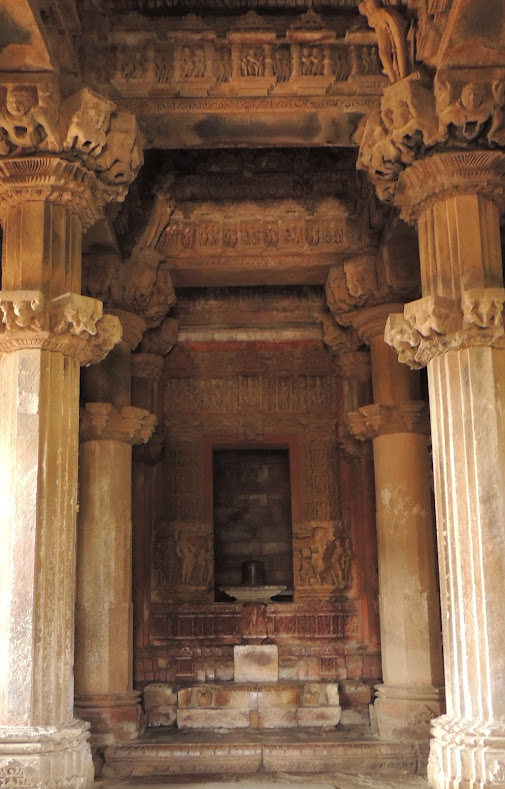 |
| Lingam in the sanctum of the Vishwanatha Temple |
The lingam itself has many forms...... like this massive one at the Matangeshwara temple, where we are allowed to climb up on the base to worship the lingam itself...
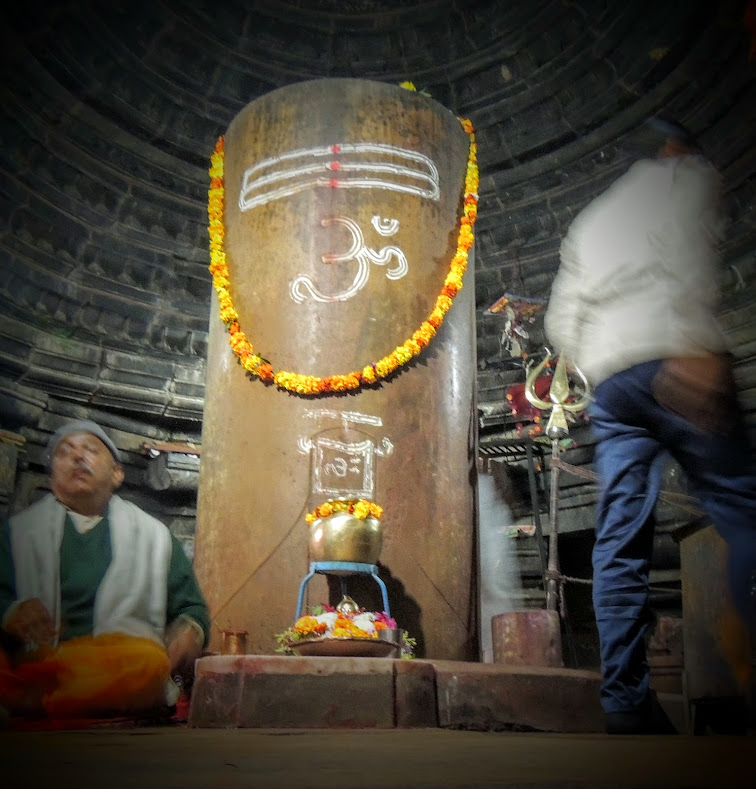 |
| Lingam in the sanctum of the Matangeshwara Temple. What you can see is the top part of the lingam, with the priest seated on the base. The photo has been clicked by me standing at the floor level. The top of the base is my eye level, so you can imagine the size. |
Or this Sahasralingam at the Duladeo Temple, where the main lingam has been covered with 999 smaller ones, magnifying the power of the lingam a thousand times.
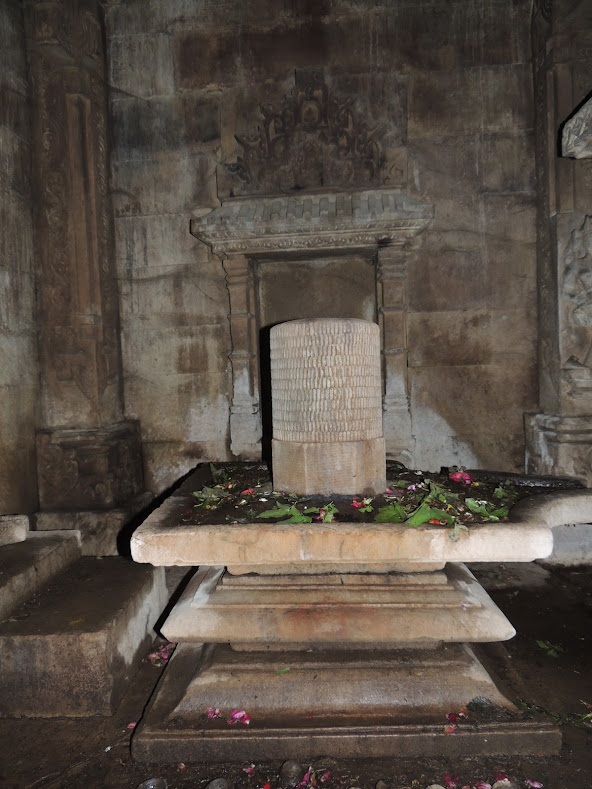 |
| Sahasralingam in the sanctum of the Duladeo Temple |
It is thus interesting to see, that within the same wide framework of Shaivite belief, the lingam itself is seen in many forms, its power and importance magnified, through size, as well as multiplication.
While this aniconic form reigns within the sanctum, outside, it is his exploits depicted in stone which are so fascinating. The most interesting sculptures are, of course, within the sanctum of the Kandariya Mahadev Temple. Unfortunately, the interior of the temple was under renovation when I visited, so I have no photographs of these amazing forms. These include, among others, Shiva as Tripurantaka, destroying the three cities of the demons, as well as Andhakasuravada-murti, destroyer of Andhakasura. There are also beautiful and unique sculptures of Sadashiva, his cosmic form, both, in the niches of the sanctum as well as at the museum, both of which I have no photos of.
The other form of Shiva which is given great importance at Khajuraho is Kalyana-Sundara-murti, where he is depicted at the moment of his marriage, to Parvati. This form is also called Parvati-parinaya, or the marriage of Parvati. Again, while I do not have the photo from the Kandariya Mahadev temple, this panel is oft-repeated in other temples as well....
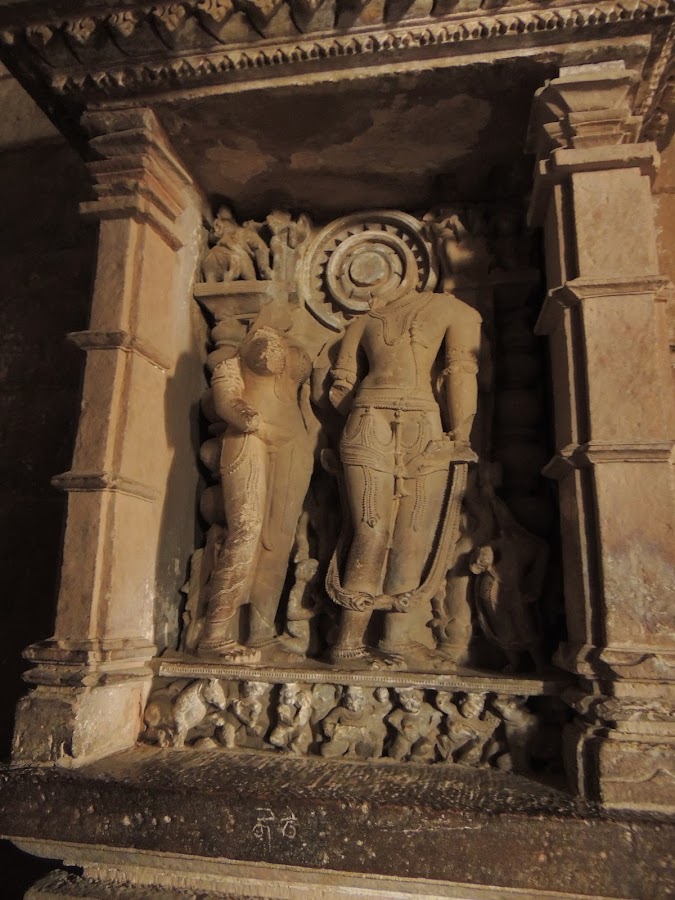 |
| Kalyana Sundara Murti, from the Lakshmana Temple. Though the figure is damaged, and the faces are no longer visible, the grace and beauty is still seen. |
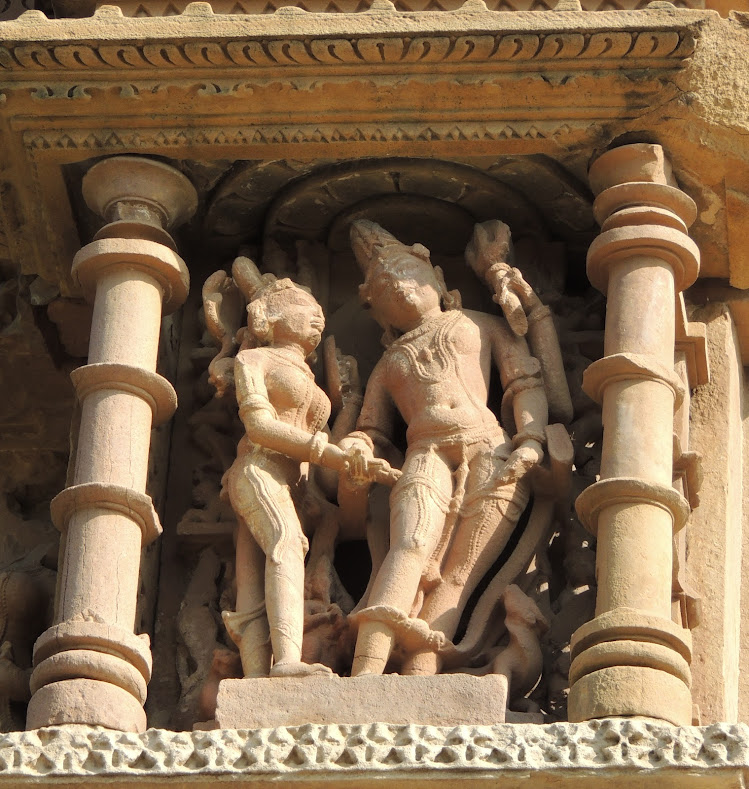 |
| Kalyana Sundara murti, from the Vamana Temple. This is a much clearer image, though quite small, on one of the higher niches of the spire. Though the sculpture is weathered, you can still see the details such as Agni in his human form standing between the two, symbolising the sacred fire, which is witness to the divine marriage. The Bull, Nandi gracefully turns it neck to see the divine couple, and the Lion, which is Parvati's vehicle, stands unobtrusively by the side. |
Another form seen at Khajuraho is Gajantaka or Gajasamharamurti, where Shiva is shown destroying the demonic elephant created by the sages. It is one of my favourite depictions, a dynamic one, where Shiva pulls the elephant apart with his bare hands!
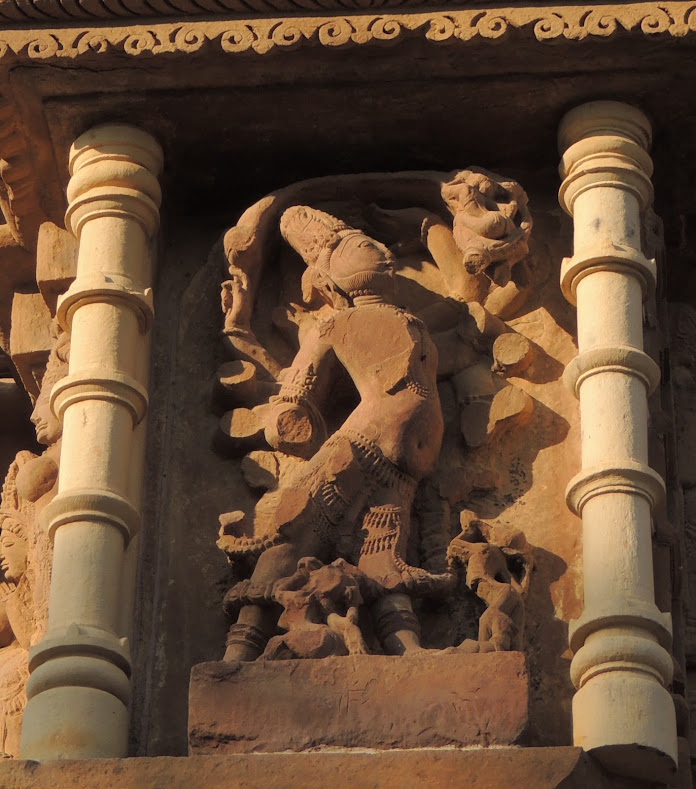 |
| Gajantaka from the Duladeo Temple. Shiva here is shown with a beard, and multiple arms, of which two are outstretched, holding the elephant skin, while the Ganas look on. |
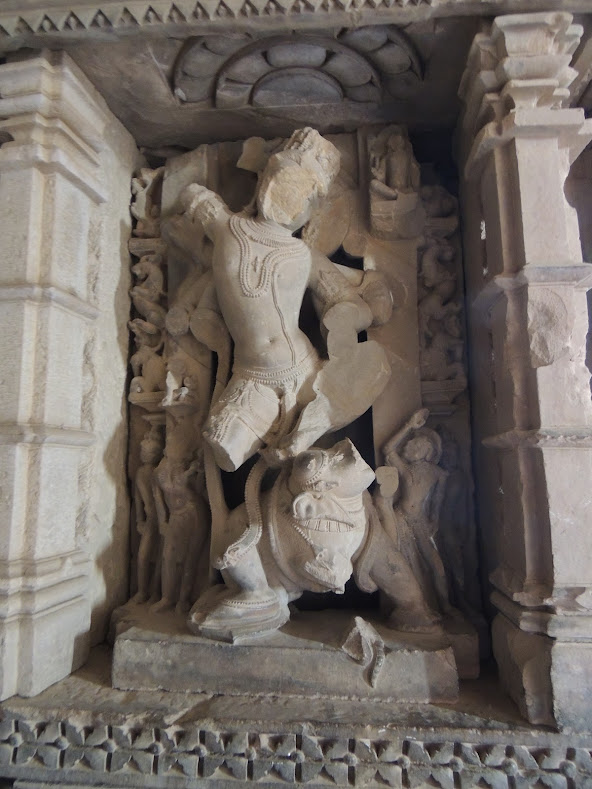 |
| Gajantaka, from the Vamana Temple, where Shiva is shown battling the elephant. Sadly, much of this sculpture is broken, and we cannot see many of the details. |
Shiva is often shown with Parvati.. either seated in close embrace with her, or in his form as Ardhanareeshwara, where she occupies one half of his body...
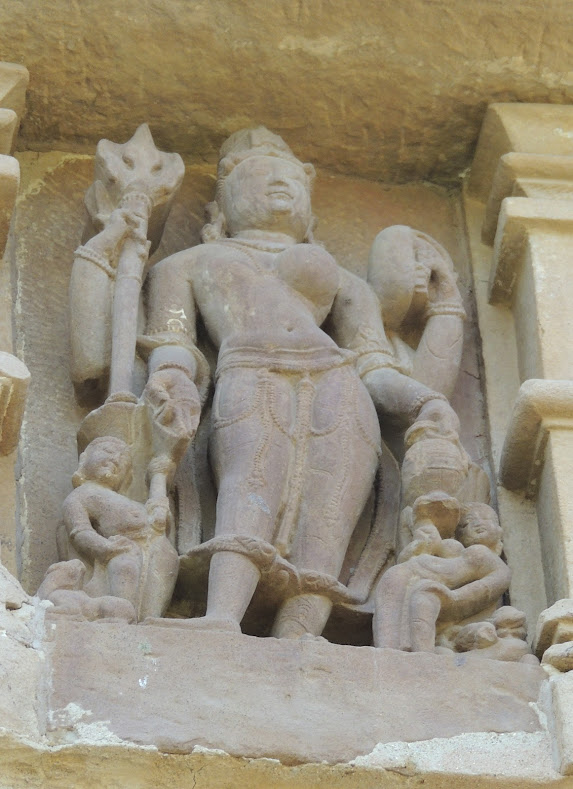 |
| Ardhanareeshwara, Kandariya Mahadev Temple |
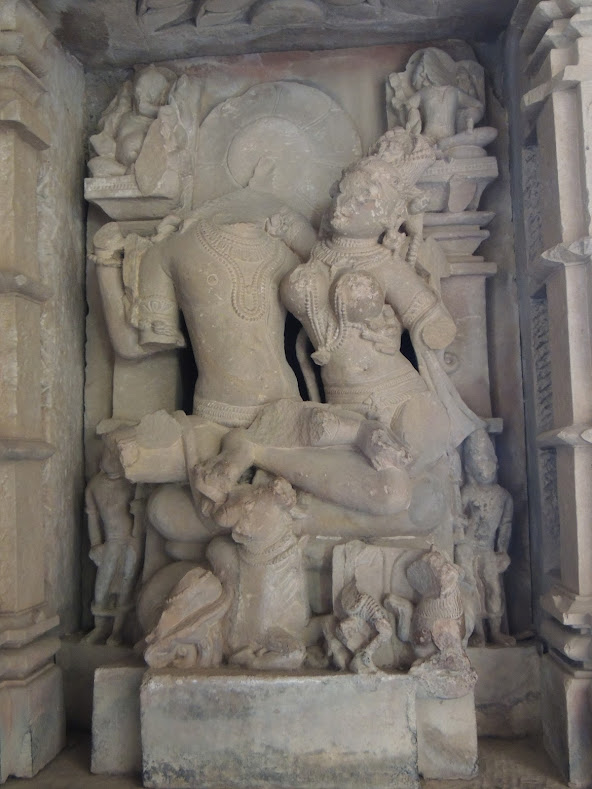 |
| Shiva as Uma-Maheshwara, or Uma Alingana Murti, from the Vamana Temple where he is shown seated with Parvati in a close embrace. |
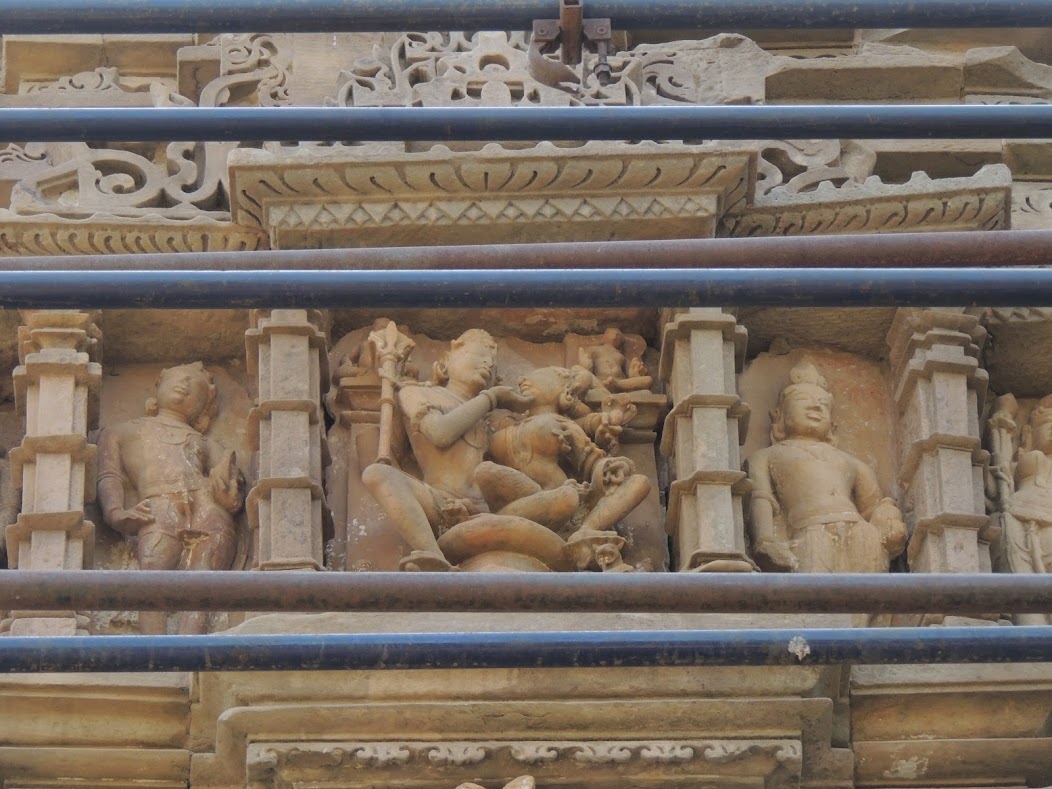 |
| A beautiful Uma Maheshwara, from the Vishwanatha Temple |
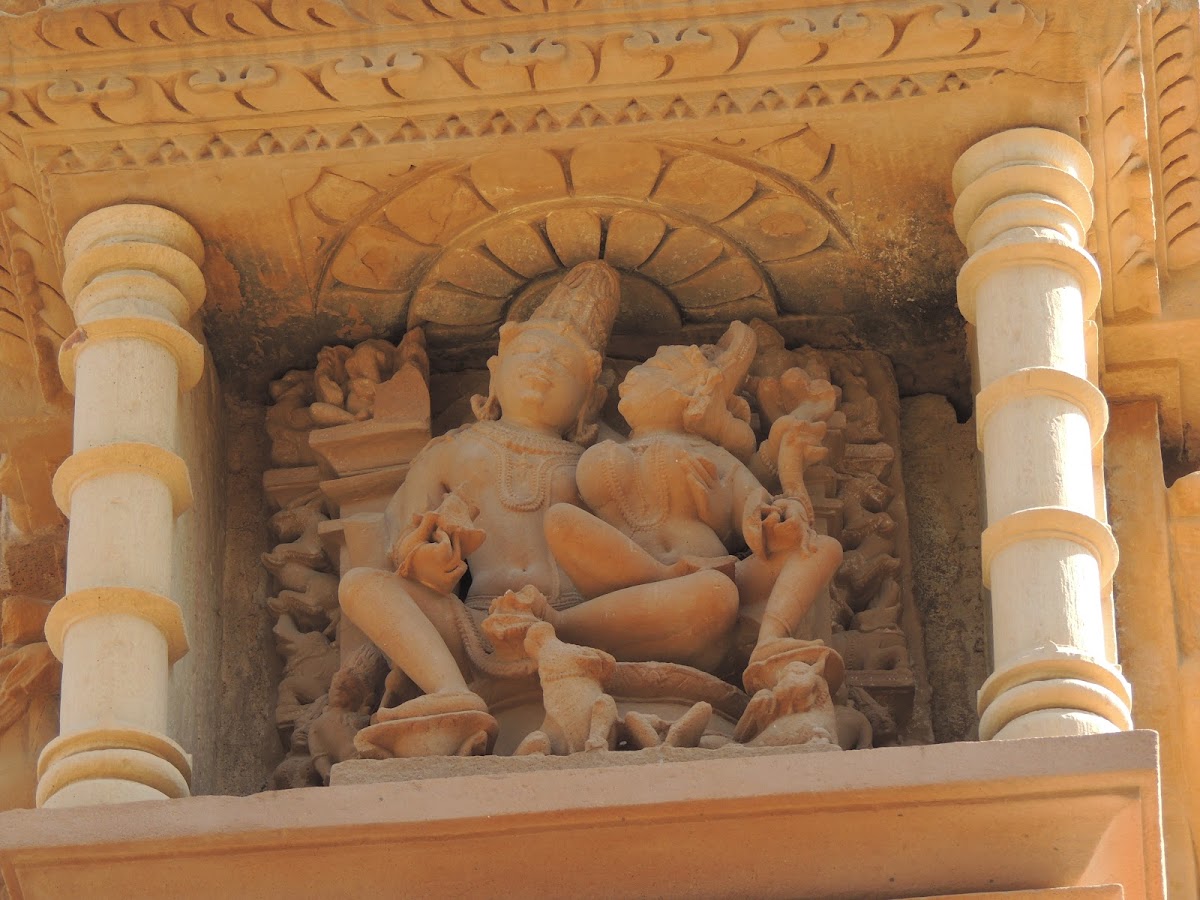 |
| Uma Maheshwara from the Kandariya Mahadev Temple. Note that though there is no trishul in Shiva's hand, you can see Nandi gazing adoringly at the divine couple. Also notice Ganesha and Kartikeya on the top. |
While these are the popular forms of Shiva, there are other forms as well, where he is seen simply standing or seated, with all his attributes....
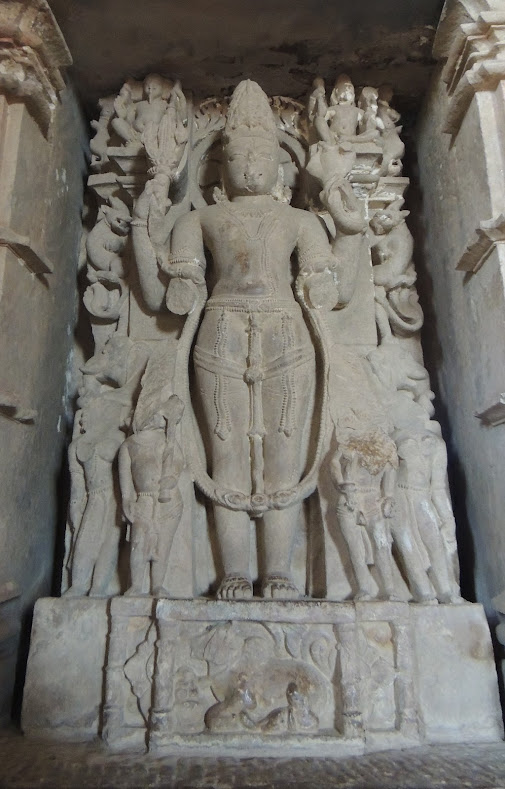 |
| Standing Shiva, from the hall of the Lakshmana Temple |
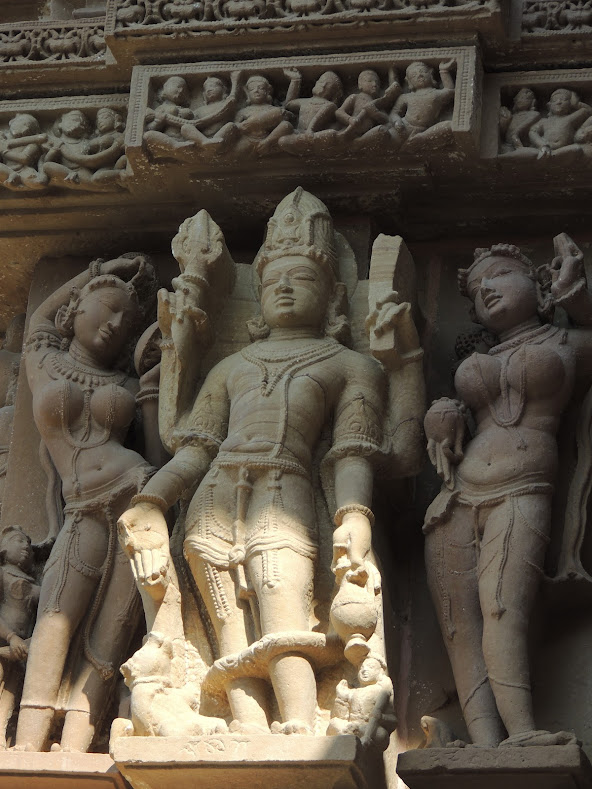 |
| Standing Shiva, from one of the panels in the Lakshmana Temple. |
These are, as I have already mentioned, only some of the forms of Shiva in Khajuraho. As usual, there is lots more for me to see and observe, and I am not yet done with Khajuraho. Hopefully, I shall visit the temples again someday...... Meanwhile, more posts coming up on other deities in Khajuraho!
Related Posts:

The Sahasra Lingam looks interesting
ReplyDeleteYes, Ranjana.. though I have seen Sahasralingams at many places. its an interesting concept though,
Delete
ReplyDeleteYour blogpost is amazing. You have got a new fan! Keep sharing your love with us.
Thankyou
Wecome to Hoian
My favourite picture amongst all that you have shared here is the saptapadi of Shiva Parvati. It is absolutely <3
ReplyDeleteI came across another beautiful Kalyana Sundaramurti at the Jhalawar Museum but this was one depicting the panigrahanam.
Another fabulous post, Anu.